
TIMELINE
Fall 2024, 4 months
ROLES
UX RESEARCHER
UX DESIGNER
INTERACTION DESIGNER
TOOLS
FIGMA
ILLUSTRATOR
UX/UI
DESIGN
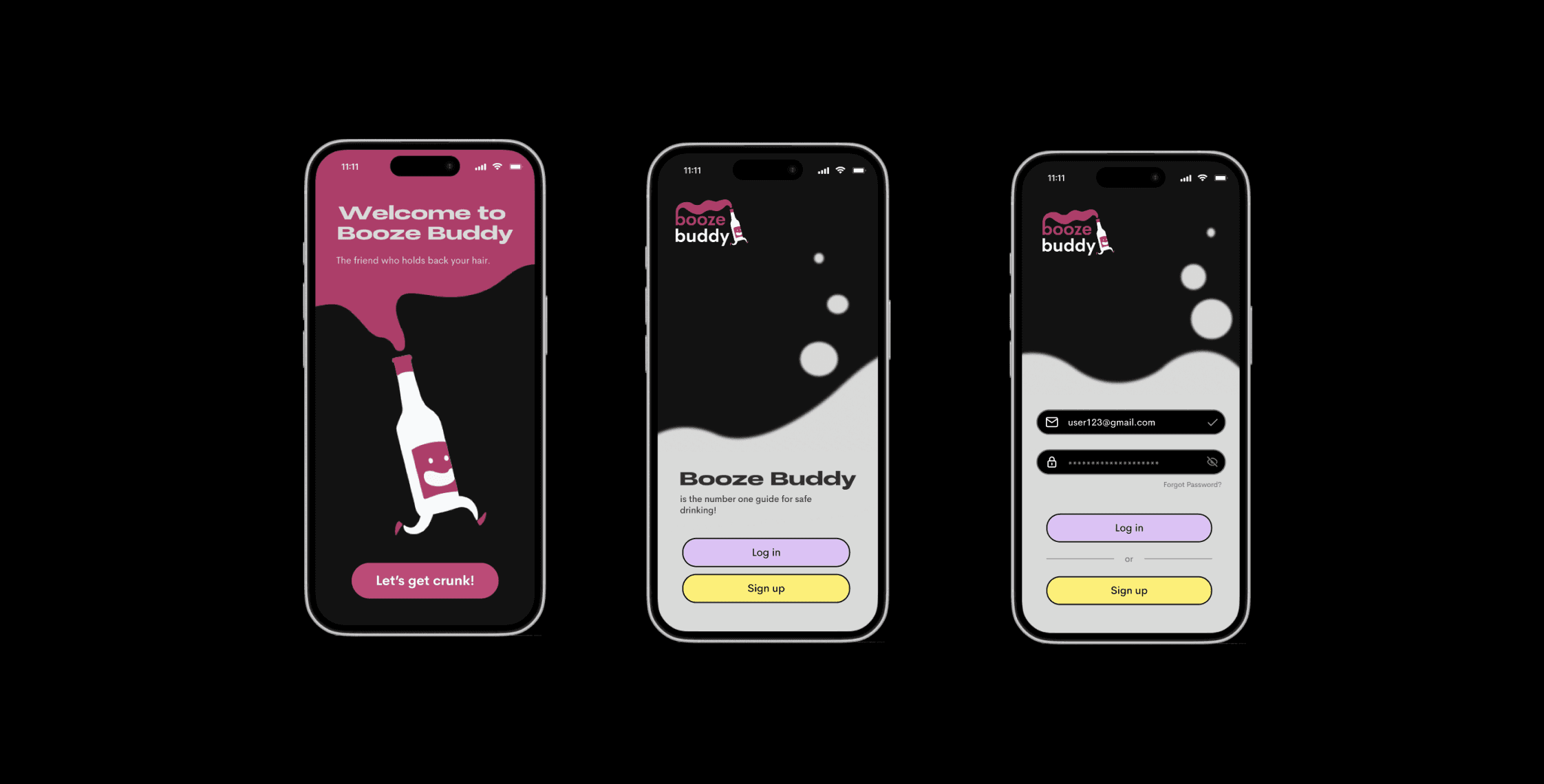
BoozeBuddy
The friend that holds back your hair.
GBDA 210 Intro User Experience & Design
Overview
What do you do when your professor tells you to choose any issue that today’s users face and design a mobile/web solution that fills a gap in the current market? My group and I naturally looked to our peers’ and our own experiences, and landed on a topic that we were highly familiar with—drinking. We saw an opportunity to design a mobile experience focused on harm-reduction, empowering users to make safer, more informed decisions while still participating in social drinking culture.
Preliminary
We conducted moderated user interviews with participants from our young adult demographic, coming up with the following key insights.
Key Insight 1
Most interviewees now stick to their drinking limits but initially struggled to identify them, often learning through negative experiences, and continue to find it challenging due to fluctuating tolerance.
Key Insight 2
Peer pressure to drink varies among interviewees, with some feeling compelled to conform to group norms while others report no pressure at all.
Key Insight 3
Interviewees acknowledge alcohol’s impact on their behavior and express a willingness to try new drinks, often influenced by social settings, curiosity, and peer encouragement.
Key Insight 4
Alcohol is commonly seen as a social lubricant that reduces anxiety, making it easier to converse, form connections, and enjoy social interactions in relaxed environments.
Problem
Young adults often struggle to maintain control over their alcohol consumption and establish safe, healthy drinking habits—particularly in environments where alcohol plays a central social role, such as university settings. Rather than attempting to eliminate drinking behaviors altogether, our research highlighted the need for tools that support safer decision-making within existing social norms.
“How might we promote safe and healthy drinking behaviors while creating a positive, non-judgmental space around alcohol consumption?”
Process
Defining The User
To ground our design decisions, we developed personas and user tasks to clearly map user needs, behaviors, motivations, and emotional states. This ensured the product remained relevant and user-centered throughout the design process.
Tentative List of Requirements
Must Include | Should Include | Could Include | Exclude |
|---|---|---|---|
Immediate access to critical safety information and crisis resources (e.g., alcohol poisoning, blackout response, emergency helplines) | Clear, easy-to-follow navigation and directions optimized for impaired usability | Editable personal profiles for updating alcohol limits and drink preferences | No social media sharing of drinking habits, locations, or experiences to protect user privacy |
Onboarding survey to assess drinking experience, health considerations, BMI, and flavor preferences | Timely notifications reminding users of their drinking limits during peak drinking hours | ||
Location tracking for users and opted-in friends to support safety and accountability |
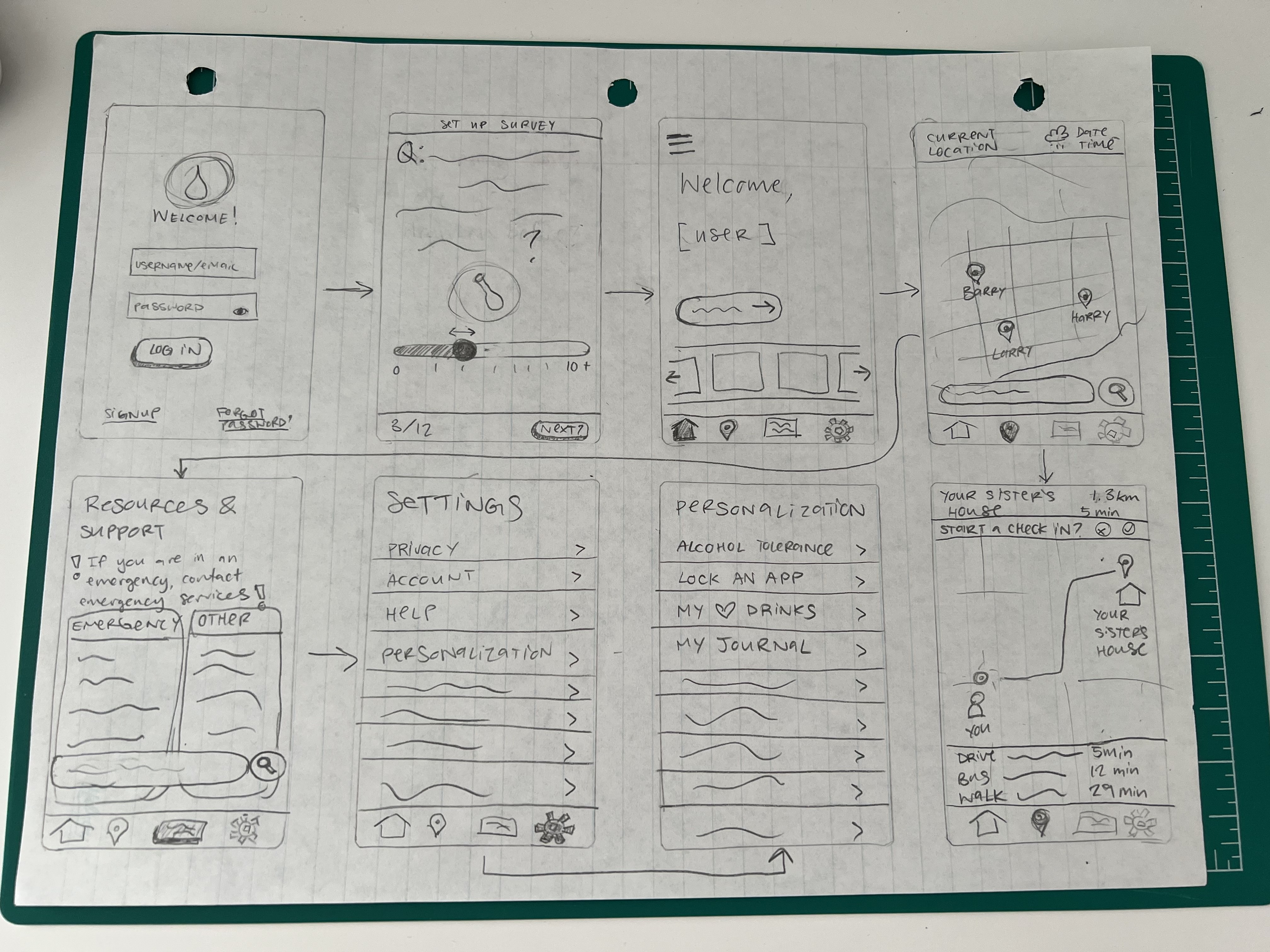
Wireframing
Low-Fidelity Prototype
Low-Fidelity Prototype to High-Fidelity: Improvements
Through quick rounds of testing, we learned the importance of button placement for mobile usability, prioritizing thumb accessibility and familiar concepts like sliders to support intuitive navigation and a more accessible user experience.
Usability Heuristics Addressed
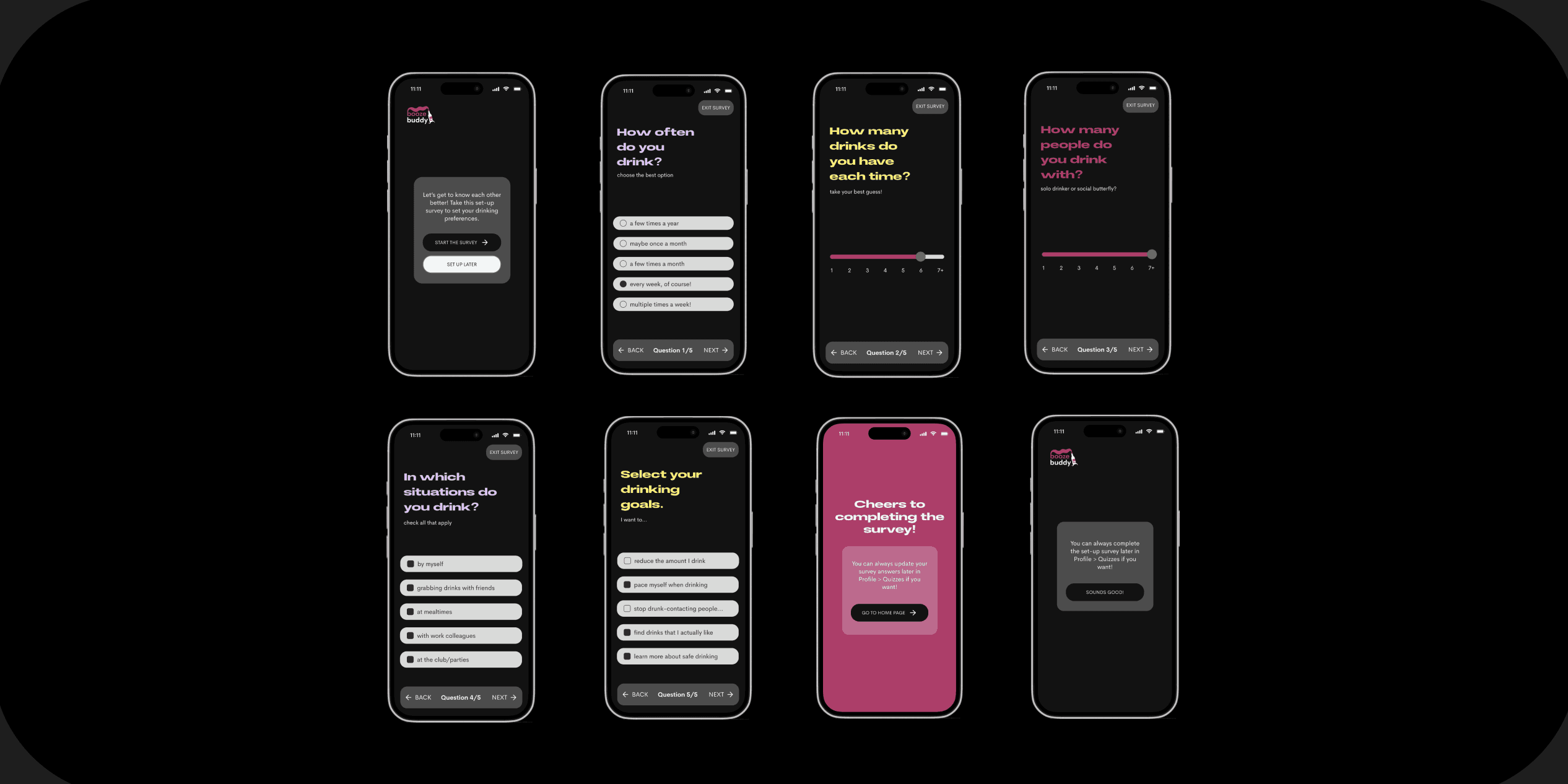
During testing, we identified gaps related to Visibility of System Status and User Control & Freedom.
While our onboarding quiz offered personalization through multiple-choice inputs, early prototypes lacked:
Progress indicators
Back and exit navigation options
Given that many users are new to drinking and may already feel anxious in these environments, we revised these flows to offer greater transparency and control—helping users feel confident and at ease while onboarding.
Tone, Copy & Branding
Language played a critical role in establishing trust with our users. We intentionally avoided patronizing or authoritative messaging, opting instead for a friendly, empathetic, and supportive tone.
Tagline: The friend that holds back your hair.
Short, relatable, and emotionally resonant, this tagline reinforces BoozeBuddy as a non-judgmental companion rather than a monitoring tool.
We further humanized the experience through a personified mascot and conversational microcopy (e.g., “Don’t let BoozeBuddy down 🤝”), increasing approachability and encouraging engagement without guilt or shame.
Solution
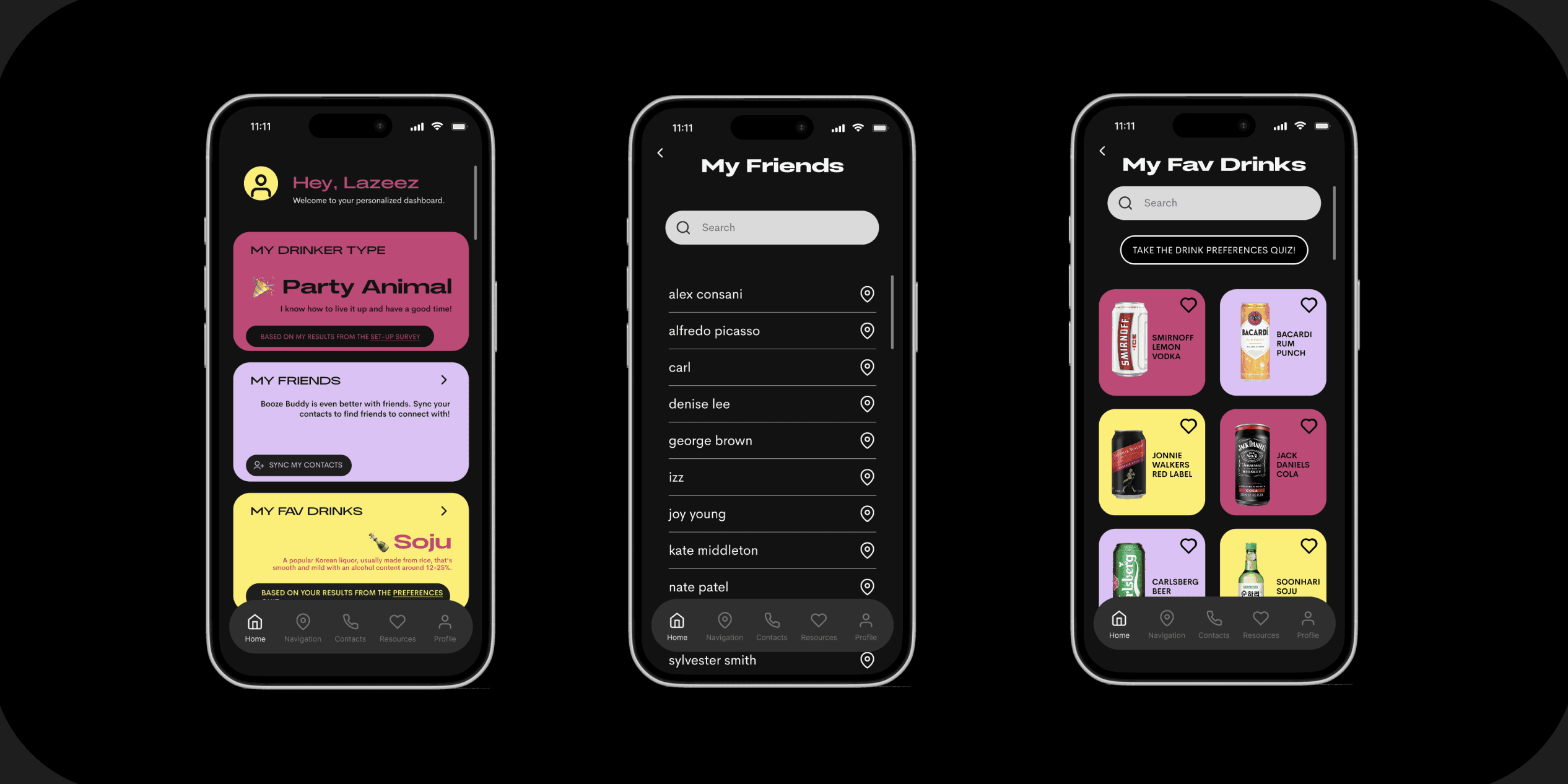
High-Fidelity Prototype
Retrospective
As my first end-to-end application of the Design Thinking process, this project emphasized the importance of usability heuristics, established UX standards, and structured workflows in creating effective digital products. Following these principles not only improved the user experience but also significantly increased design efficiency.
With additional time, future iterations would include:
Deeper user research and usability testing to prioritize high-impact features and eliminate low-value functionality.
Reintroducing BMI as an optional onboarding benchmark to provide users with a clearer baseline for safe alcohol consumption, while acknowledging its limitations as a sole metric.

DESIGNED BY JOANNE LANG

© 2025 JOANNE LANG
ALL RIGHTS RESERVED